Saturday, July 5, 2014

More About Orphée – Online Soon from La Monnaie

Opera Cake (the blogger) calls La Monnaie's new Orphée et Eurydice "simply devastating," and says we need to see in person. While OC did not reveal why (but promised a fuller review soon), I've a feeling some of it has to do with the projections (see below, and other photos at La Monnaie's site.)

Unfortunately, many of us in the U.S. can't pop over to Brussels within the next few weeks. So we won't be able see it in person. We will have get by with watching it online. And we can do that on-demand for about 20 days, starting this coming Wednesday, July 9.

© Bernd Uhlig
Orphée et Eurydice 
Christoph W. Gluck/Hector Berlioz
Orphée  Stéphanie d'Oustrac
Eurydice Sabine Devieilhe
Music direction Hervé Niquet
Staging, set design, lighting & costumes  Romeo Castellucci

Wednesday, July 2, 2014

Watching the Radio – The Baritones-on-Ö1 Edition*

*With a bonus mezzo. Because there should always be a mezzo.

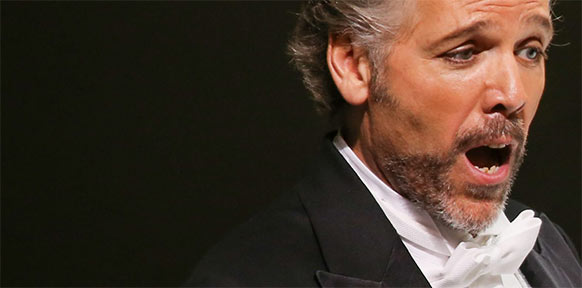
Thomas Hampson: Richard Strauss Orchestral Songs


Gerald Finley: Schubert and Liszt Lieder


Willi Domgraf-Fassbaender and his lovely daughter Brigitte, who is kind of an honorary baritone, since she often "gets the girl" in Operaland. And besides, it's her birthday! (July 3rd – this one airs Thursday night.)  


Monday, June 30, 2014

Mozart Monday – Dorothee Mields sings Et incarnatus

I came across this performance of Mozart's Great C-minor Mass on YT. It was labeled "Best performance"). While the overall performance is certainly not the best I've ever heard, I was charmed by the soprano soloist: Dorothee Mields (who specializes primarily in Baroque music). 

OK,  there are a couple super-high notes that are a little off-center (the danger/thrill of live performance), but I love her pure tone and her expressive use (and non-use) of vibrato. Here is her performance of "Et incarnatus est." (Unfortunately the person who made this excerpt cut off the instrumental coda. But you can hear the whole mass at the link above.)


Friday, June 27, 2014

Come on Manon, let's go!

I used to think (in my young childhood*) the opera was called Manon, Let's Go. And it's not totally nonsensical. I mean, when you think about it, that's basically what Des Grieux and Lescaut say to her in Act 2 while she's busy scooping up her jewelry instead of running from the police. 

Anyway, the reason for this post is to highlight the bounty of "making of" videos the ROH has posted for their new production of Puccini's Manon Lescaut. (This was Puccini's first big hit. Apparently, he could easily have retired and lived off his profits from Edgar and Manon. But fortunately, he didn't rest on his laurels, or he never would have written La Boheme, and a few other big hits!)

Blogger eyesometric provides us with a bunch of other links about this production, and also reminds us that the BBC Radio 3 will be broadcasting a live performance of this new production from the ROH featuring Kristine Opolais, Jonas Kaufmann, and Christopher Maltman with Anthony Pappano waving the stick. 

Meanwhile, here are those videos:


*Yes, I was already listening to opera as a young child. I used to record the Met broadcasts on my reel-to-reel for frequent playback. One that I listened to over and over was an Ariadne with Tatiana Troyanos and…well, I didn’t care about who else was in it at that point. 

Thursday, June 26, 2014

Throwback Thursday – Two Tenors on Ö1 Radio

The German language is awesome. Who else has a specific word for the day someone dies: "Todestag" is the opposite of Geburtstag (birthday). So they don't observe the anniversary of someone's death, they observe the Deathday. (How very Addams Family!) Why am I even writing about this? Well, Ö1 Radio in Austria is celebrating two celebrated tenors this week. So: 

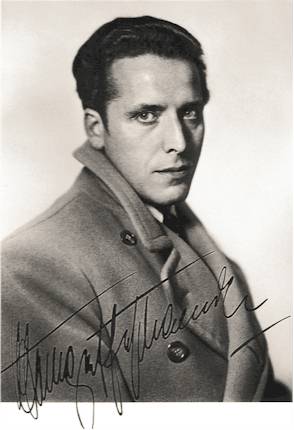
Alles gute zum Geburtstag, Heldentenor Wolfgang Windgassen *


And
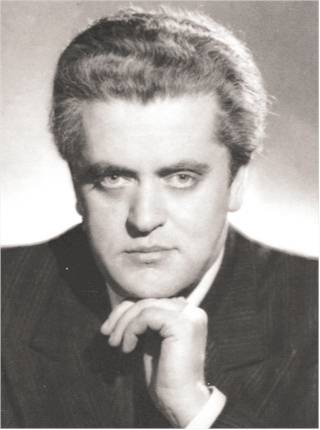
Glücklich Todestag, lyric tenor Anton Dermota** 


*This program is all Wagner. As I am writing this, the program hasn’t been broadcast yet. It’s on tonight at 19:30 CET.

**For most of his career, Herr Dermota was known for singing Mozart, Lieder, and operetta, but he occasionally ventured into heldentenor territory; there's an excerpt from Fidelio in this program.


Related Posts Plugin for WordPress, Blogger...